
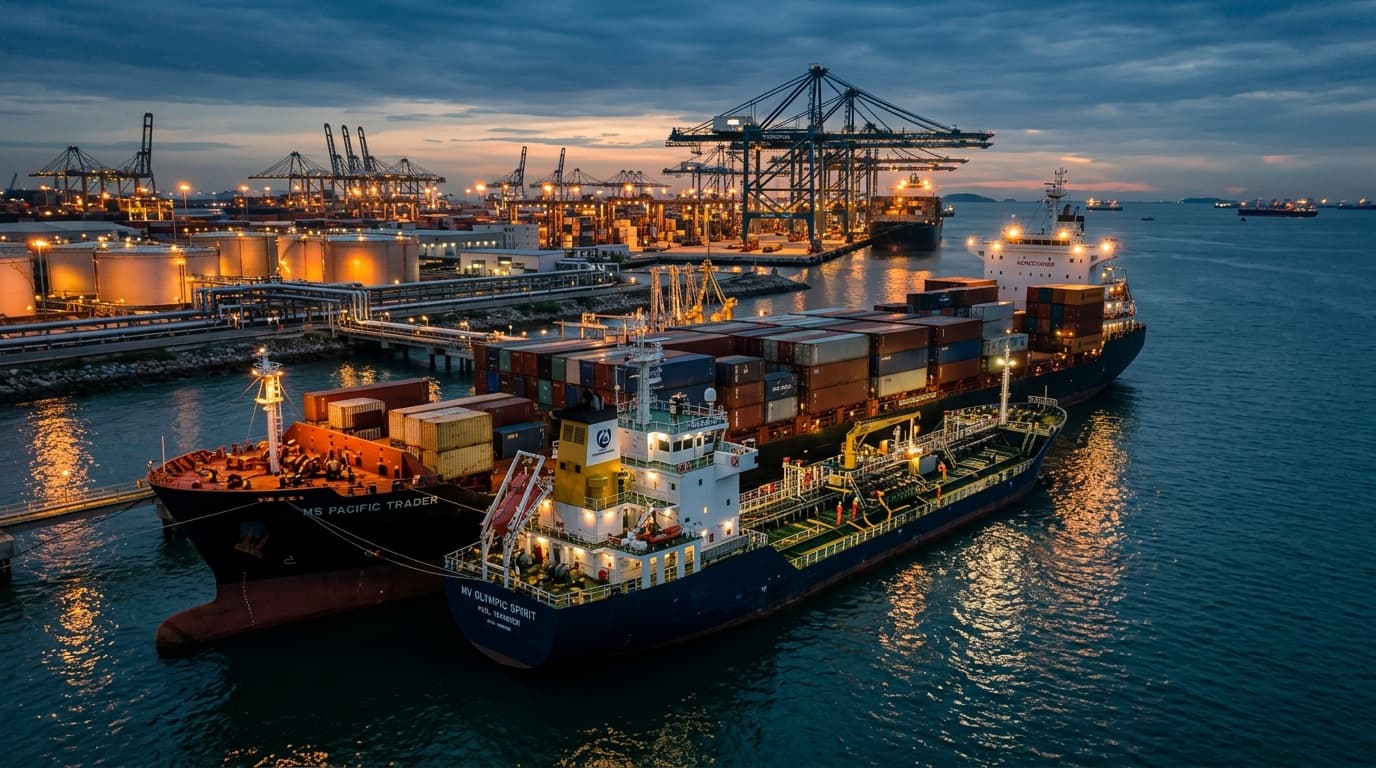
Marine Bunkering & Off-Grid Fueling: Solving Complex Maritime Logistics
Capt. Emmanuel Davies
Director of Maritime Logistics · 3rd Energy
Navigating offshore bunkering, coastal terminal operations, and remote location fuel delivery across West African coastal waterways.
The Complexity of Maritime Fuel Supply
Marine bunkering and remote maritime fueling require specialized operational discipline. From vessel-to-vessel transfers at coastal anchorage to dedicated supply for offshore exploration platforms and port tug fleets, precision logistics and strict environmental compliance are non-negotiable.
Key Operational Parameters in Marine Bunkering
1. MARPOL Annex VI & Fuel Specification Compliance
Marine Gasoil (MGO) and Low Sulphur Fuel Oil (LSFO) must strictly conform to ISO 8217 standards, with strict flash point (>60°C) and maximum sulfur content thresholds verified before bunkering.
2. High-Flow Metering & Custody Transfer
Custody transfer operations utilize certified Coriolis mass flow meters to ensure transparent volume measurement immune to aeration or temperature variations.
3. Spillage Prevention & Tier-1 Oil Spill Response
Bunkering vessels and terminal docks deploy containment booms, dry-break breakaway couplings, and dedicated rapid-response skimmers prior to initiating product pumping.
Capt. Emmanuel Davies
Director of Maritime Logistics · 3rd Energy Advisory Group
Specializing in commercial energy risk management, industrial procurement logistics, and corporate energy transition frameworks across West Africa.
Ready to Apply These Insights to Your Operations?
Our technical and procurement advisors work directly with commercial and industrial operations teams to implement verified cost-saving supply structures.
Inquire About Marine Fuel Supply